A bill of materials for every product you make or assemble
Price a handmade product by feel and rising material costs eat your margin without a sound. inyad's bill of materials software lists the components in each finished product, rolls up what one unit costs to build, and lets you price your made goods with a real margin.

Know what it costs to build before you set a price
For makers and assemblers, every finished product is a sum of its parts. Without a BOM, you're pricing on feel, and margins disappear.
Price from real cost, not memory
Pricing from memory is guessing. A few dirhams missed on every unit is a margin you never see leaving, order after order.
Stay current as component prices change
Supplier prices move every season. Sell all year on last year's costs and the loss only shows up once the year is over.
Keep stock accurate after builds
When a build is not recorded, raw materials and finished goods are both wrong, and you reorder things you already have.
BOM costing designed for makers, not factories
List what goes into one unit, log the run, and your component stock and your finished goods both move in one step.
Build a complete BOM for every product you make
For each finished product you define every component that goes into one unit, raw materials, parts, packaging, and consumables, with quantities and units of measure. inyad totals the build cost per unit, and when a component price changes the BOM cost updates to match without being asked.
- Add any number of components per product, materials, packaging, accessories, and labels
- Specify quantity and unit (pieces, grams, meters, litres) for each component
- Component cost rolls up automatically to a total unit build cost you can price from

Log a production run and stock updates on both sides
When you complete a build, a batch of candles, a set of assembled kits, or a week of hand-stitched goods, you record only the quantity produced. inyad deducts the components from raw material stock and adds the finished units to sellable inventory in one step, in the same moment.
- Record a production run by quantity and inyad handles the stock movements on each side
- Component stock reduces by the exact amounts specified in the BOM
- Finished goods appear in your sellable inventory, ready to sell at POS or online
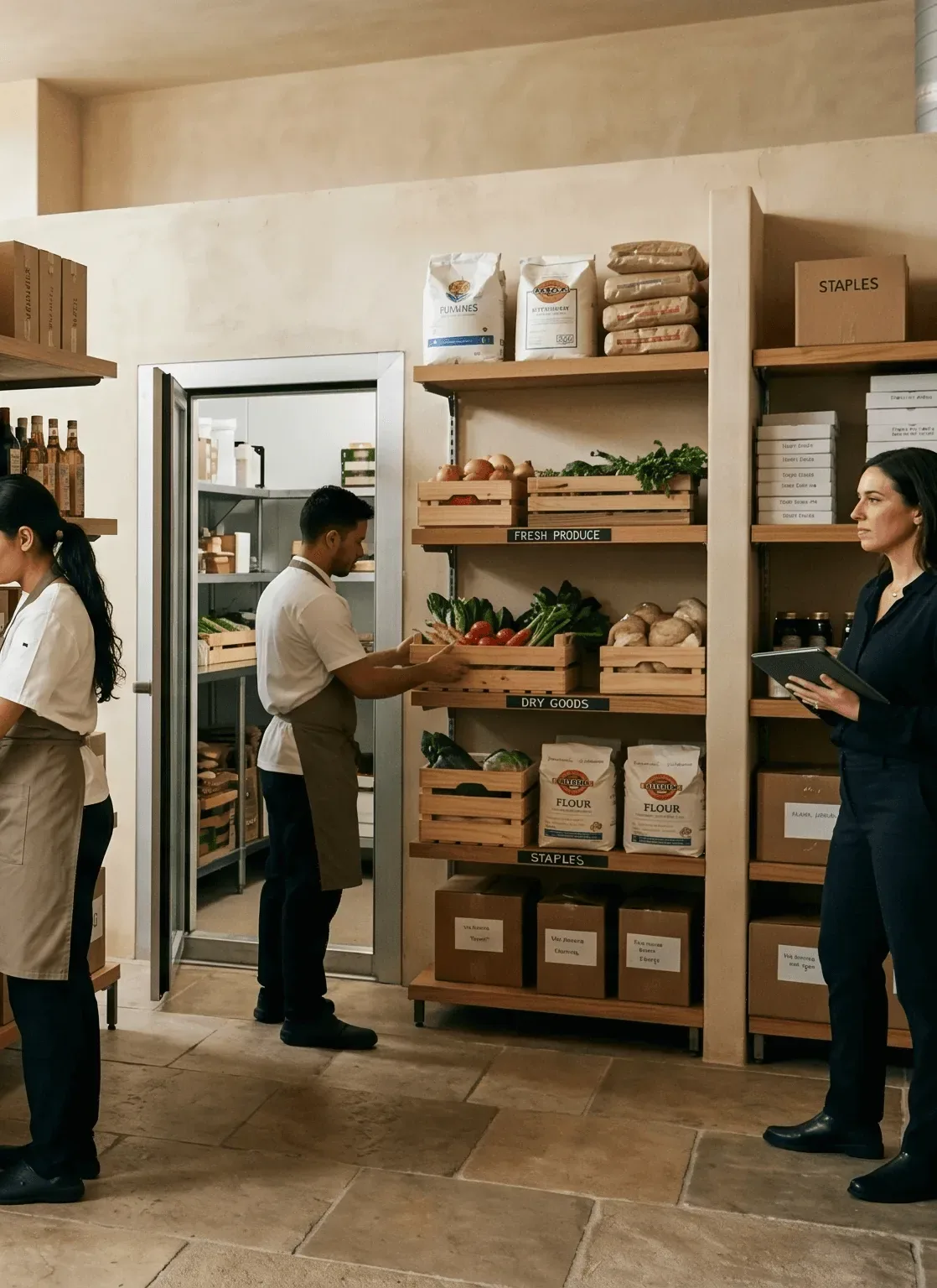
Cost gift sets, hampers, and product bundles the same way
Not everything you assemble is made from raw materials, sometimes you group existing products into a bundle, a hamper, or a gift kit. inyad handles that exactly like a component BOM: the total cost is the sum of what you put in, from seasonal hampers to everyday retail bundles.
- Group existing sellable products into a bundle or kit with a single BOM entry
- Selling the bundle deducts each component from stock separately and automatically
- Know the real cost of the bundle before you set the gift-set price

One toolkit for costing what you make
From the component list to the finished build, costs roll up, stock moves on both sides and every run is logged.
BOM costing for makers, workshops, and assemblers
Handmade goods, furniture, assembled components and product bundles are all costed from their material list.
Independent professionals
Candles, soaps, textiles, ceramics, leather goods, cost every handmade product from its raw materials and know your margin per unit.
Furniture & home decor
Furniture makers, metalworkers, and joiners: define the timber, hardware, and finishes in each piece.
Manufacturers, distributors & wholesalers
Operations that assemble purchased components, electronics accessories, kits, or custom builds, cost each SKU accurately.
Retail
Hampers, subscription boxes, and retail bundles use kitting BOMs to know each set's true cost before pricing.
Bill of materials works better with the rest of inyad
Components, finished goods, purchasing, sales, and reporting live in one inyad platform, the price you pay for a component is entered once.
Production & costing
The parent feature that frames both BOM and recipe costing together.
Learn moreInventory management
Components and finished goods share one inventory, builds update both.
Learn moreCatalog management
BOM components pull prices from the catalog you buy and sell from.
Learn morePurchase orders
Restock the components your BOMs consume, raise POs from the same platform.
Learn moreMakers who stopped pricing by feel
I used to estimate the cost of each candle by feel. Now I have the exact figure for every variant, and I adjusted my prices accordingly, the difference in margin is significant.
When wood prices went up, I could see immediately which pieces were now too cheap. Instead of finding out at month end, I repriced the same week.
Common bill of materials software questions
Who requires bill of materials (BOM) costing software, and how does it differ from a standard legacy manufacturing ERP?
How does the platform calculate the exact cost of a manufactured product with nested components?
Can I use BOM costing to manage complex multi-pack retail configurations and subscription box bundles?
How does our bill of materials system protect electronics and appliance retailers from component stockouts?
Know the cost of every product you make
Define your BOMs, track component stock, and price made goods with real margin data, not guesswork.
Get a free demo Start free